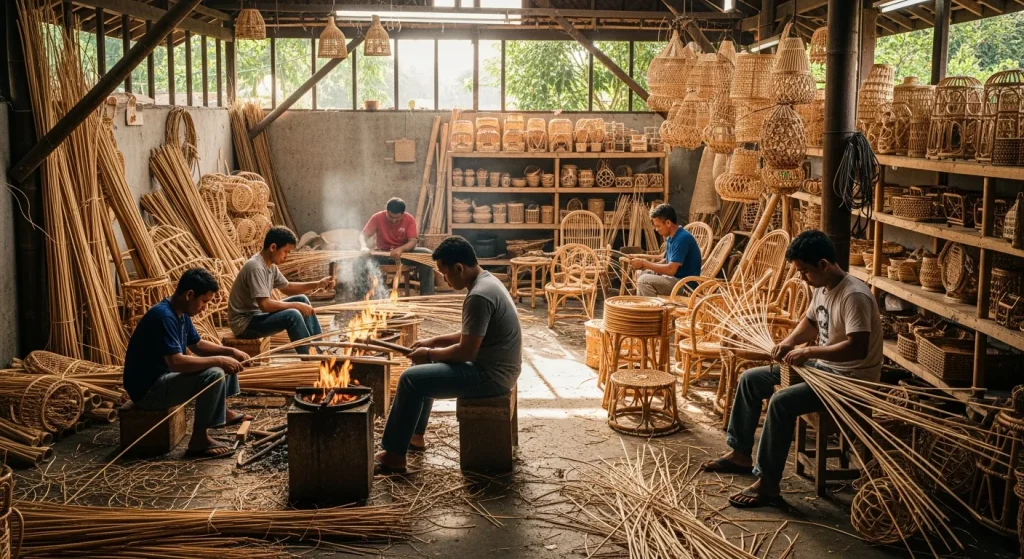
Indonesia, including Bali and Java, is the leading global production and export hub for wholesale rattan furniture, a position projected to continue through at least 2027. The global rattan furniture market is a mid-sized and growing sector, experiencing mid-single to low-double digit growth. Buyers focusing on Bali rattan wholesale seek container-scale orders of indoor/outdoor furniture and home decor, typically priced in the mid-range of the global market.
Buyer’s Checklist for High-Quality Bali Rattan Wholesale Orders
As a lead for Bali Rattan Wholesale, I understand the specific requirements of international importers, wholesalers, retailers, and trade buyers. This checklist provides a direct guide to ensuring quality and mitigating risks when sourcing rattan furniture from Bali.
Understanding the Rattan Furniture Wholesale Market
The global rattan furniture wholesale market is experiencing steady growth, driven by demand for sustainable materials and outdoor furnishings. Indonesia is the primary production and export hub. When considering Bali rattan furniture for resort or other large-scale projects, understanding market dynamics is crucial for strategic sourcing.
Global Market Overview
Industry reports estimate the global rattan furniture market size in 2024 between USD 3.2 billion and USD 8.75 billion, depending on the methodology used. Forecasts project growth from approximately USD 9.2 billion in 2025 to USD 15.2 billion by 2035, indicating a Compound Annual Growth Rate (CAGR) of around 5.2% over this period. Other analyses suggest a CAGR of approximately 7.2% from 2026–2033, reaching USD 5.6 billion by 2033 from USD 3.2 billion in 2024. A separate assessment indicates growth of USD 717.2 million during 2023–2028 at a 2.8% CAGR.
Despite numerical variations, the consensus points to consistent mid-single-digit global growth. This growth is primarily fueled by:
- Increasing demand for sustainable, natural materials in furniture production.
- Robust demand for outdoor and patio furniture, particularly in North America and Europe.
- Expansion of supply chains across Asia Pacific, with Indonesia, Malaysia, and Vietnam being key contributors.
Asia-Pacific and Indonesia’s Role
Asia-Pacific is the largest regional market, projected to account for approximately USD 3.5 billion of market value in 2024. This is driven by urbanization and a preference for rattan in both indoor and outdoor applications. APAC is also identified as the fastest-growing region, with a projected 42.3% share of global market revenue growth from 2023–2028.
Indonesia is the leading global exporter of rattan furniture, holding a significant share of global trade. In 2022, Indonesia exported USD 138.8 million worth of rattan furniture, representing 41.5% of the total global export value of USD 334.3 million. This market share is substantial and underscores Indonesia’s dominant position. Other notable exporters include China, Vietnam, and the Philippines, with shares of 23.3%, 12.4%, and 7.1% respectively. The United States, Germany, Japan, and France are among the top importing countries.
For Bali rattan wholesale, the market is a sub-cluster within Indonesia, specifically serving international buyers with container-scale orders. Products include indoor and outdoor furniture, alongside home decor items, typically positioned in the mid-range of the global market in terms of pricing.
2027 note: Indonesia is projected to maintain its position as the leading production base and export hub for rattan furniture through at least 2027, making it a reliable long-term sourcing partner for international buyers.
Quality Control and Material Standards
Ensuring the quality of Bali rattan furniture for resort applications requires a rigorous approach to material selection and manufacturing processes.
Rattan Species and Sourcing
Indonesia is home to approximately 80% of the world’s raw rattan material. The country cultivates over 300 species of rattan, with about 30 suitable for commercial use. Key species include Manau (Calamus manan), Tohiti (Calamus caesius), and Sega (Calamus trachycoleus). Manau is prized for its strength and diameter, suitable for furniture frames. Tohiti and Sega are thinner, often used for weaving and intricate designs.
Our co-op sources rattan primarily from Sulawesi, Kalimantan, and Sumatra, where sustainable harvesting practices are employed. These regions are known for their dense rattan forests and established supply chains. Ethical sourcing ensures material availability and supports local communities.
Drying and Treatment Processes
Proper drying is critical to prevent warping, cracking, and mould. Rattan undergoes a multi-stage drying process:
- Air Drying: Initial drying under shade for several weeks to reduce moisture content gradually.
- Kiln Drying: Further drying in controlled kilns to achieve a consistent moisture content of 8-12%. This process is essential for stability in varying climates.
Treatment involves:
- Boiling: Rattan canes are boiled in oil to remove sap, enhance flexibility, and prevent insect infestation.
- Fumigation: Post-drying, rattan is fumigated to eliminate pests and ensure compliance with international import regulations.
- Anti-Mould Treatment: Application of anti-mould agents suitable for export to mitigate fungal growth during transit and storage.
Manufacturing and Craftsmanship
The quality of Bali rattan furniture is also dependent on the manufacturing techniques and the skill of the artisans.
Frame Construction
Strong frames are fundamental for durable furniture. Our craftsmen utilise solid rattan poles, typically Manau, for structural components. Joints are secured using traditional methods such as:
- Lashing: Rattan strips or natural fibres are tightly wrapped around joints, providing both strength and aesthetic appeal.
- Dowel Joints: Wooden dowels are used for reinforced connections, particularly in larger pieces.
- Screws and Adhesives: Where appropriate, screws are used for added stability, often concealed, and high-quality wood adhesives are applied to secure joints.
All frames are inspected for stability and load-bearing capacity.
Weaving Techniques
The weaving defines the aesthetic and resilience of rattan furniture. Common weaving patterns include:
- Cane Weave: A classic open hexagonal pattern, known for its breathability and lightness.
- Wicker Weave: A general term for woven furniture, often referring to tighter, more intricate patterns using smaller rattan strands.
- Open Weave: Looser, more decorative patterns suitable for backs and sides of chairs.
- Closed Weave: Tightly woven patterns, often used for solid surfaces like tabletops or chair seats, providing more durability.
Artisans are skilled in maintaining consistent tension and pattern integrity across all woven surfaces, ensuring uniformity and longevity.
Finishing and Durability
The final finish protects the rattan and enhances its appearance. For Bali rattan furniture for resort settings, durability against environmental factors is paramount.
Coatings and Protection
We apply several layers of protective coatings:
- Lacquers: Provide a hard, clear finish that protects against scratches and moisture.
- Varnishes: Offer a durable, often slightly glossy finish, enhancing the natural colour of the rattan.
- UV-Resistant Finishes: Essential for outdoor rattan furniture to prevent fading and degradation from sun exposure. These finishes are specifically chosen for their performance in tropical and varied climates.
- Water-Resistant Sealants: Applied to reduce moisture absorption, important for pieces used outdoors or in humid environments.
All finishes are non-toxic and compliant with international safety standards.
Hardware and Accessories
For furniture requiring hardware, such as hinges, glides, or fasteners, we use corrosion-resistant materials:
- Stainless Steel: For outdoor furniture, ensuring resistance to rust and corrosion.
- Brass: Often used for decorative elements, offering durability and a refined appearance.
- High-Quality Plastics/Rubbers: For feet glides and protective caps, preventing floor damage and providing stability.
Logistics and Export Compliance
Efficient logistics and adherence to export regulations are vital for successful wholesale orders.
Packaging Standards
Furniture is carefully packed to withstand international shipping:
- Individual Wrapping: Each item is wrapped in foam, bubble wrap, or corrugated cardboard to prevent surface damage.
- Corner Protectors: Applied to vulnerable edges.
- Crating: For fragile or high-value items, custom wooden crates are constructed to provide maximum protection.
- Container Loading: Items are strategically loaded into containers to minimise movement and maximise space efficiency. Desiccants are used to control humidity.
Documentation and Certification
Complete and accurate documentation is provided for every shipment:
- Commercial Invoice: Detailing goods, value, and terms of sale.
- Packing List: Itemising contents of each package.
- Bill of Lading/Air Waybill: Transportation contract and receipt for goods.
- Certificate of Origin: Verifying Indonesia as the country of manufacture.
- Fumigation Certificate: Proof of pest treatment, often required by customs.
- Phytosanitary Certificate: For raw materials or items with natural elements, confirming freedom from pests and diseases.
We ensure compliance with CITES (Convention on International Trade in Endangered Species of Wild Fauna and Flora) regulations, particularly for any rattan species potentially listed, though common commercial rattan species are generally not CITES-listed.
Supplier Relationship and Communication
A transparent and effective relationship with your Bali rattan wholesale supplier is crucial.
Communication Protocol
Clear communication channels are established:
- Dedicated Account Manager: A single point of contact for all order-related queries.
- Regular Updates: Timely notifications on production status, quality control checks, and shipping schedules.
- Language Proficiency: Our team is proficient in British English, ensuring clear and unambiguous communication.
Sample and Prototyping
For new designs or large orders, prototyping is available:
- Sample Production: Creation of a single item for quality and design approval before mass production.
- Design Modifications: Flexibility to adjust designs based on client feedback during the prototyping phase.
Pricing and Payment Terms
Our pricing for Bali rattan furniture for resort projects is competitive within the mid-range of the global wholesale market. We offer transparent pricing structures and flexible payment terms.
Payment Schedule Example
| Stage | Payment Percentage | Notes |
|---|---|---|
| Order Confirmation | 30% | Non-refundable deposit to initiate production. |
| Production Completion | 50% | Upon completion of manufacturing and quality inspection, prior to packaging. |
| Shipment Dispatch | 20% | Before the container leaves our facility, upon presentation of final shipping documents. |
Specific terms can be negotiated based on order volume and established buyer relationships. We accept international bank transfers (TT) and Letters of Credit (LC) for larger orders.
By adhering to this checklist, buyers can confidently navigate the process of sourcing high-quality Bali rattan furniture for resort, retail, or other trade applications. Our commitment to material integrity, craftsmanship, and export compliance ensures a reliable supply chain for your business needs. For detailed inquiries or to discuss your specific requirements, request a wholesale quote on WhatsApp.