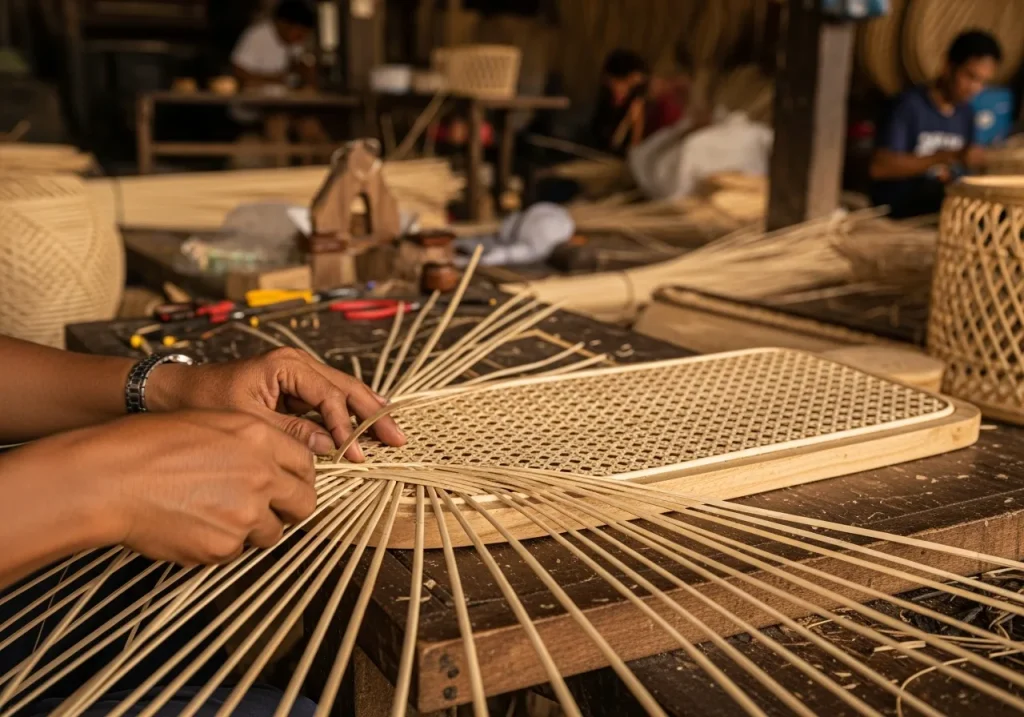
The global rattan furniture wholesale market is a mid-sized and growing sector, with Indonesia, including Bali and Java, established as the leading production and export hub through at least 2027. Bali rattan wholesale specifically caters to international buyers with container-scale orders of indoor and outdoor furniture and home decor, predominantly priced in the mid-range of the global market.
Bali Rattan Wholesale Pricing 2027: Analyzing Markup Shifts and Global Supply Chain Impacts
As Ni Kadek Ariani, lead of a rattan weaving co-op and senior content lead for Bali Rattan Wholesale, I provide this analysis for importers, wholesalers, retailers, interior contractors, and trade buyers. This report details the market dynamics influencing wholesale boho rattan furniture Bali pricing, examining markup shifts and global supply chain impacts relevant for 2027 and beyond.
1. Market Size & Growth: Global to Indonesia
Global Rattan Furniture Market
Industry reports estimate the global rattan furniture market size in 2024 between USD 3.2–8.75 billion. Forecasts project growth from approximately USD 9.2 billion in 2025 to USD 15.2 billion by 2035, indicating a Compound Annual Growth Rate (CAGR) of about 5.2% (2025–2035). Another analysis projects 2024 at USD 3.2 billion, reaching USD 5.6 billion by 2033, with a CAGR of around 7.2% (2026–2033). A separate study anticipates growth of USD 717.2 million during 2023–2028 at a 2.8% CAGR.
Despite numerical variations, there is consensus on steady mid-single-digit growth globally, driven by:
- Rising demand for sustainable, natural materials in furniture.
- Strong demand for outdoor and patio furniture in North America and Europe.
- Expansion of supply chains in Asia Pacific, particularly Indonesia, Malaysia, and Vietnam.
Asia-Pacific and Indonesia
Asia-Pacific is the largest regional market, expected to account for approximately USD 3.5 billion of market value in 2024. This growth is driven by urbanization and a preference for rattan in both indoor and outdoor settings. One global forecast identifies APAC as the fastest-growing region, contributing 42.3% of global market growth through 2028. Indonesia is the leading production base and export hub within APAC for rattan furniture.
As the world’s largest producer and exporter of rattan, Indonesia holds a significant position. The country accounts for approximately 80% of global raw rattan supply and 70% of global finished rattan furniture production. Indonesia’s rattan furniture export value was USD 218 million in 2023, representing about 16.5% of its total furniture exports. The average annual growth rate for Indonesian rattan furniture exports was 1.4% from 2019 to 2023, with a notable increase of 2.9% from 2022 to 2023. Key export markets for Indonesian rattan furniture include the USA, Germany, Japan, France, and Australia.
Bali Rattan Market Share (Inferred)
While specific market data for Bali rattan is not isolated, Bali is a significant sub-cluster within Indonesia’s rattan furniture industry, focusing on international container-scale orders. Given Indonesia’s overall market share, Bali’s contribution to the wholesale boho rattan furniture segment is substantial, particularly for mid-range products. The island’s established infrastructure supports export to global buyers.
2. Global Supply Chain Impacts and Input Costs
Raw Material Availability and Pricing
Indonesia’s abundant raw rattan supply, accounting for 80% globally, provides a stable base. The government’s ban on raw rattan exports (since 2011, reinforced 2012) ensures domestic supply for local manufacturers. This policy supports value-added production within Indonesia, influencing pricing for finished goods. Raw material costs, while generally stable due to domestic supply, can be affected by harvest yields and local logistical challenges. In 2027, continued enforcement of the raw rattan export ban is expected, maintaining a competitive advantage for Indonesian producers.
Labour Costs and Skilled Workforce
Indonesia possesses a skilled labour force with generations of rattan weaving expertise. Labour costs are competitive compared to many other manufacturing regions, contributing to Indonesia’s ability to offer mid-range pricing. Vocational training programs and government initiatives support skill development in the furniture sector, ensuring a steady supply of artisans. Wage increases, while present, are typically managed within the broader economic context, impacting final product costs incrementally rather than dramatically.
Shipping and Logistics
Global shipping costs have stabilised compared to pandemic-era peaks but remain a variable factor in overall delivered pricing. Bali’s proximity to major shipping lanes and established export infrastructure supports efficient container shipments. Freight rates are influenced by global fuel prices, geopolitical events, and port congestion. Buyers should factor in these variables for 2027, as they directly affect the landed cost of goods. The availability of diverse shipping lines from Indonesia offers some flexibility in managing transit times and costs.
Energy Costs
Energy costs, including electricity and fuel for production and transport, are a component of manufacturing expenses. Indonesia’s energy market is relatively stable, with government subsidies sometimes influencing consumer and industrial rates. Fluctuations in global oil and gas prices can indirectly affect production costs through utility tariffs and transportation fuel. These costs are typically passed on as part of the overall product price.
3. Markup Shifts and Pricing Strategies for 2027
Wholesale Markup Analysis
Wholesale markups for Bali rattan furniture are influenced by several factors, including production costs, market demand, competition, and the specific product’s complexity and design. Typical wholesale markups vary but generally allow for competitive pricing in the mid-range segment. Manufacturers aim for markups that cover production, overheads, and a reasonable profit margin while remaining attractive to international buyers seeking container-scale orders.
2027 Note: By 2027, the market is expected to have further adapted to post-pandemic supply chain norms. This means that while raw material and labour costs are likely to remain stable, efficiency gains in production and logistics will be key for manufacturers to maintain competitive pricing and healthy margins. Buyers can anticipate a stable pricing environment, with potential for minor adjustments based on global economic indicators rather than major supply shocks.
Pricing Components Table
Below is an illustrative breakdown of typical pricing components for wholesale boho rattan furniture from Bali, reflecting the mid-range market positioning:
| Component | Description | Approximate Share of Ex-Factory Price |
|---|---|---|
| Raw Materials | Rattan cane, weaving materials, timber frames, hardware | 30-40% |
| Labour Costs | Skilled weaving, carpentry, finishing, quality control | 25-35% |
| Overheads | Factory utilities, rent, administration, depreciation | 10-15% |
| Packaging | Cartons, wrapping, protective materials for export | 5-10% |
| Local Transport | Factory to port, customs clearance fees | 3-5% |
| Profit Margin | Manufacturer’s profit | 10-15% |
Competitive Landscape
Indonesia faces competition from other APAC countries like Vietnam and Malaysia, which also produce rattan furniture. However, Indonesia’s distinct advantage lies in its vast raw material reserves and established artisan community. Bali’s specific appeal in the wholesale boho rattan furniture segment comes from its design aesthetic and reputation for quality craftsmanship. Maintaining competitive pricing involves optimising production processes and leveraging Indonesia’s cost advantages.
4. Sustainability and Ethical Sourcing
Demand for sustainable and ethically sourced products continues to influence purchasing decisions. Bali Rattan Wholesale is committed to responsible sourcing, utilising rattan from sustainably managed Indonesian forests. Our co-op model supports fair wages and working conditions for local artisans. This commitment to sustainability is not just an ethical imperative but also a market differentiator, particularly for buyers whose end consumers prioritise eco-conscious products. Transparent supply chains and certifications, where applicable, add value to the wholesale offering.
5. Outlook for Wholesale Boho Rattan Furniture Bali in 2027
The outlook for wholesale boho rattan furniture from Bali in 2027 remains positive. The market is characterised by steady global growth, driven by demand for natural and sustainable materials. Indonesia’s position as the leading production hub, coupled with Bali’s established export capabilities, ensures continued relevance for international buyers. Pricing will remain competitive in the mid-range, with markups reflecting stable input costs and efficient supply chain management. Buyers prioritising quality, craftsmanship, and ethical sourcing will find Bali a reliable source for container-scale orders.
For specific inquiries or to discuss your wholesale requirements, please request a wholesale quote on WhatsApp. We are available to provide detailed pricing and product information tailored to your business needs.