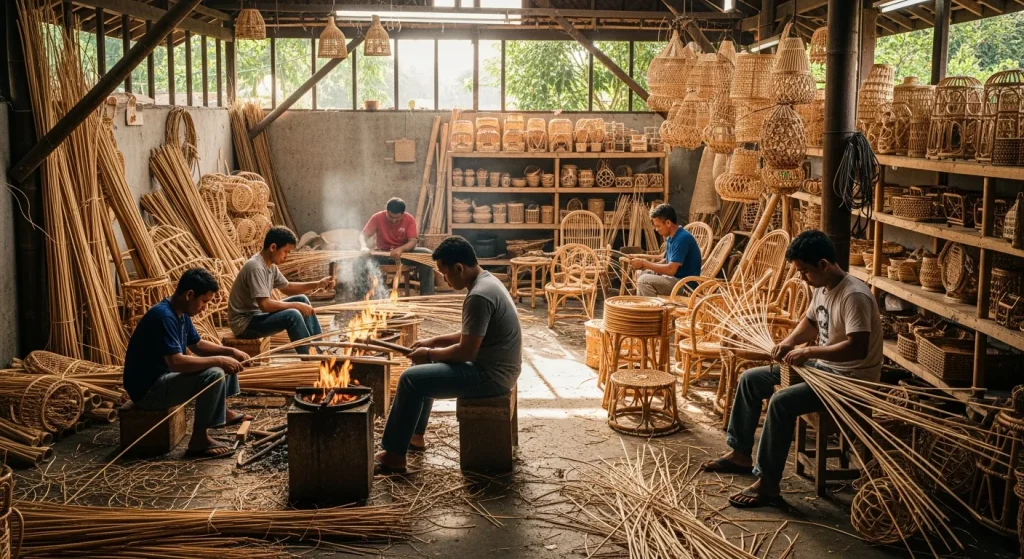
The global rattan furniture wholesale market is projected to grow steadily, with Indonesia, including Bali and Java, maintaining its position as a leading production and export hub through at least 2027. Buyers sourcing Bali rattan furniture for hotel projects and other large-scale needs will find prices primarily in the mid-range of the global market.
Bali Rattan Wholesale Pricing Trends 2027: What’s Changing for Buyers
As Ni Kadek Ariani, lead for Bali Rattan Wholesale, I provide an overview of the rattan furniture market, focusing on factors influencing pricing and supply for B2B buyers through 2027. This analysis draws on current industry data, with a specific lens on Indonesia and Bali’s role in the global wholesale landscape.
The Global Rattan Furniture Market: Size and Growth
The global rattan furniture market is a mid-sized sector experiencing consistent growth. Industry estimates for its size in 2024 range from USD 3.2 billion to USD 8.75 billion, depending on the research methodology employed. Projections for future growth indicate a steady upward trend:
- One forecast suggests growth from USD 9.2 billion in 2025 to USD 15.2 billion by 2035, representing a Compound Annual Growth Rate (CAGR) of approximately 5.2% over that decade.
- Another analysis places the 2024 market at USD 3.2 billion, expanding to USD 5.6 billion by 2033, a CAGR of approximately 7.2% from 2026 to 2033.
- A separate study projects market growth of USD 717.2 million between 2023 and 2028, at a 2.8% CAGR.
Despite variations in specific figures, there is consensus on sustained mid-single-digit growth globally. This growth is primarily driven by increasing demand for sustainable and natural furniture materials, strong interest in outdoor and patio furniture in North America and Europe, and the expansion of supply chain capabilities in Asia Pacific, particularly in Indonesia, Malaysia, and Vietnam.
Asia-Pacific and Indonesia’s Dominance
The Asia-Pacific region is the largest and fastest-growing regional market for rattan furniture. It is expected to account for approximately USD 3.5 billion of market value in 2024, driven by urbanisation and a regional preference for rattan in both indoor and outdoor settings.
Indonesia is the leading global exporter of rattan furniture and raw rattan, holding an approximate 80% share of the world’s raw rattan supply. The country’s rattan furniture exports were valued at USD 158.4 million in 2022, placing it as the top global exporter. This strong position is supported by its extensive natural rattan resources and established manufacturing infrastructure.
While specific market data for Bali as a standalone entity is not available, Bali’s rattan furniture sector is a significant sub-cluster within Indonesia’s broader industry. It serves international B2B buyers with container-scale orders of indoor and outdoor furniture and home decor, with products typically priced in the mid-range of the global market.
Key Factors Influencing Rattan Furniture Pricing
Several factors contribute to the pricing of rattan furniture, particularly for wholesale buyers:
- Raw Material Costs: As Indonesia controls the majority of the world’s raw rattan supply, domestic regulations and harvesting quotas directly impact material availability and cost.
- Labour Costs: The skilled craftsmanship required for rattan weaving significantly influences production costs. Wage trends in key production regions like Java and Bali are therefore relevant.
- Logistics and Shipping: International freight rates, port congestion, and fuel prices are critical components of the landed cost for importers.
- Design Complexity and Customisation: Intricate designs and bespoke orders for projects such as bali rattan furniture for hotel projects typically command higher prices due to increased labour and development time.
- Exchange Rates: Fluctuations in the Indonesian Rupiah (IDR) against major currencies like the USD, Euro, or GBP affect the final price for international buyers.
Impact of Sustainability and Ethical Sourcing
Demand for sustainable and ethically sourced products continues to grow, influencing purchasing decisions and, indirectly, pricing. Buyers are increasingly seeking transparency in supply chains, including evidence of responsible harvesting and fair labour practices. Manufacturers who invest in certifications or demonstrate robust ethical sourcing policies may see this reflected in their product positioning and, potentially, pricing, as it adds value for discerning buyers.
Manufacturing and Supply Chain Dynamics
Indonesia’s manufacturing capabilities are robust, particularly in Java and Bali. The industry benefits from a skilled workforce and established infrastructure. However, supply chain resilience remains a focus. Diversification of material sourcing and production locations within Indonesia is a strategy employed by some manufacturers to mitigate risks associated with localised disruptions. For Bali rattan furniture for hotel projects, consistent supply and quality control are paramount, making established manufacturers with stable supply chains preferable.
Technological Advancements in Production
While rattan weaving remains a manual skill, technology plays a role in other aspects of furniture production. Precision cutting, efficient finishing processes, and advanced inventory management systems can improve efficiency and consistency, contributing to cost control without compromising the handcrafted nature of rattan furniture.
2027 Note on Market Stability
By 2027, the Indonesian rattan furniture industry is expected to have further consolidated its position as the leading global export hub. Buyers can anticipate a stable supply environment, provided there are no major unforeseen global economic or logistical disruptions. Focus on long-term relationships with established Indonesian manufacturers will be key for consistent pricing and supply for bali rattan furniture for hotel projects.
Pricing Outlook for 2027
Based on current trends, the pricing for Bali rattan wholesale products is expected to remain competitive within the mid-range global market. While some upward pressure may come from increasing raw material demand and potentially higher labour costs, efficiency gains in production and a competitive export environment are likely to moderate significant price increases. Buyers focused on bali rattan furniture for hotel projects should anticipate stable pricing for standard designs, with customisation and premium finishes incurring additional costs.
| Factor | 2024 Trend | 2027 Outlook |
|---|---|---|
| Raw Material Availability | Stable | Stable |
| Raw Material Cost | Moderate Increase | Moderate Increase |
| Labour Cost (IDR) | Gradual Increase | Gradual Increase |
| Shipping Costs | Volatile, but stabilising | More stable, but susceptible to global events |
| Product Range | Expanding (indoor/outdoor) | Continued expansion, focus on contract-grade |
| Sustainability Focus | High Demand | Essential for market access |
We advise our B2B clients to maintain clear communication with their suppliers regarding order volumes and timelines to ensure optimal pricing and delivery schedules. For large-scale projects, such as bali rattan furniture for hotel projects, early engagement allows for better planning and potential cost efficiencies.
2. Sourcing & Supply Chain Dynamics for Bali Rattan Wholesale
Indonesia remains the leading global supplier for rattan furniture and handicrafts. Specifically, Bali, alongside Java, forms a critical production and export hub within this framework. Buyers engaging with Bali Rattan Wholesale benefit from established supply chains that manage raw material procurement, craftsmanship, and export logistics. The primary raw material, rattan cane, is predominantly sourced from sustainable plantations and wild harvest areas across various Indonesian islands, including Sumatra, Kalimantan, and Sulawesi, before being transported to Bali for processing and manufacturing. This distributed sourcing mitigates localized supply risks and supports consistent production volumes.
Our operational model integrates local weaving cooperatives directly into the supply chain. This structure ensures a steady output of handcrafted items while supporting local communities. For container-scale orders, our network of workshops and co-ops allows for scalable production without compromising quality or lead times. Buyers can expect a streamlined process from order placement to shipping, leveraging Indonesia’s extensive experience in furniture export. The logistical infrastructure for exporting from Bali is well-developed, with established freight routes to major international markets.
Key supply chain considerations for buyers:
- Raw Material Origin: Primarily Indonesian islands (Sumatra, Kalimantan, Sulawesi).
- Production Hubs: Bali and Java, focusing on distinct product ranges and craft techniques.
- Manufacturing Model: Direct engagement with local weaving cooperatives and workshops.
- Export Logistics: Established freight forwarders and shipping lines from major Indonesian ports.
- Capacity: Scalable for container-level orders, accommodating diverse product mixes.
3. Product Range & Customisation Capabilities for Trade Buyers
Bali Rattan Wholesale offers a comprehensive product range tailored for importers, wholesalers, retailers, and interior contractors. Our catalogue includes both indoor and outdoor rattan furniture, as well as an extensive selection of home decor items. This breadth allows trade buyers to consolidate orders and source a complete collection from a single supplier. Product design often blends traditional Indonesian craftsmanship with contemporary aesthetics, ensuring market relevance across diverse international client bases. Our furniture pieces are designed for durability and aesthetic appeal, meeting mid-range market expectations for quality and pricing.
For trade buyers with specific requirements, customisation is a core service. We collaborate with clients on bespoke designs, modifications to existing products, and material specifications. This includes adjusting dimensions, finishes, weave patterns, and incorporating client-specific branding where appropriate. Our design team and skilled artisans work closely with buyers to translate concepts into production-ready items, ensuring that the final product aligns with their brand identity and target market. Lead times for custom orders are discussed on a project-by-project basis, factoring in design complexity and order volume.
Examples of customisation options:
| Category | Specific Options |
|---|---|
| Furniture | Dimensions, weave patterns, frame materials (rattan, wood, metal), cushion fabrics. |
| Finishes | Natural, bleached, stained, painted, distressed. |
| Home Decor | Size, shape, material combinations, decorative elements. |
| Branding | Private labelling, custom packaging (MOQ applies). |
For specific inquiries or to discuss your wholesale requirements, request a wholesale quote on WhatsApp.