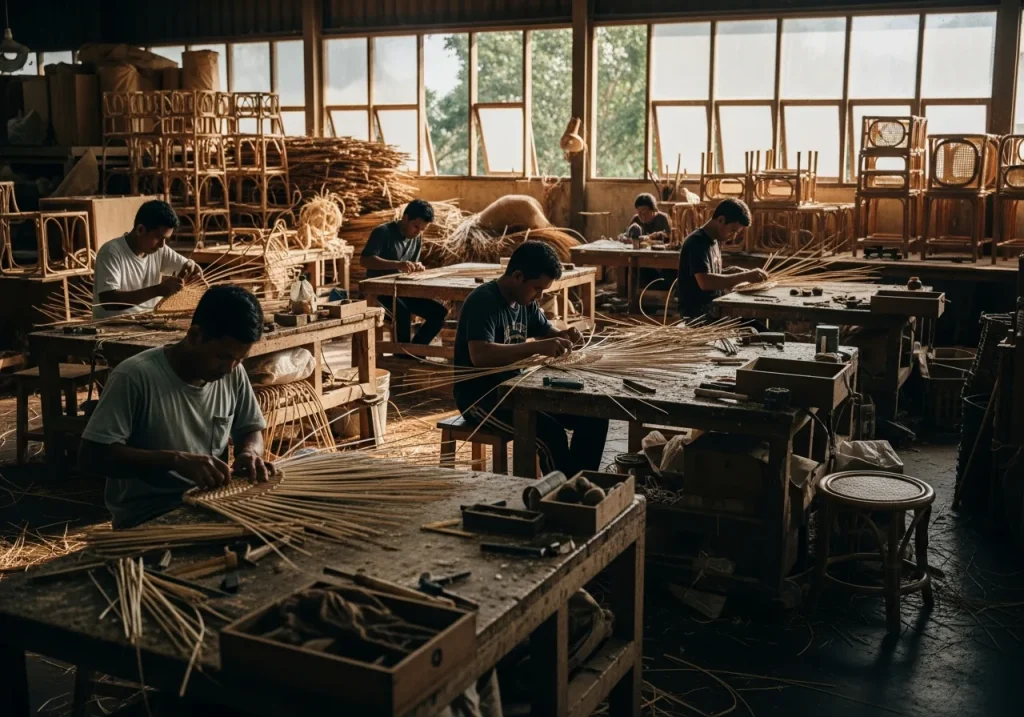
The global rattan furniture wholesale market is projected to grow steadily through 2027, with Indonesia, including Bali, maintaining its position as a primary production and export hub. Buyers seeking wholesale rattan baby furniture from Bali will find container-scale orders available, primarily priced in the mid-range of the global market.
Bali Rattan Wholesale Negotiation Tactics for 2027: Getting the Best Price
As Bali Rattan Wholesale, we facilitate B2B transactions for importers, wholesalers, retailers, and interior contractors worldwide. Understanding effective negotiation tactics is crucial for securing optimal pricing on container-scale orders of rattan furniture and home decor. This article outlines strategies for buyers navigating the Indonesian rattan wholesale market through 2027.
Understanding the Global Rattan Furniture Market in 2027
The global rattan furniture wholesale market is a mid-sized, growing sector. Projections indicate continued mid-single to low-double digit growth through at least 2027. Indonesia, encompassing Bali and Java, is firmly established as the leading production base and export hub for rattan furniture and handicrafts. For buyers specifically targeting ‘wholesale rattan baby furniture Bali,’ the focus remains on Indonesian sub-clusters serving international buyers with container-scale orders, predominantly priced in the mid-range of the global market.
Global Market Size & Growth
Industry analyses show consistent growth in the global rattan furniture market. Estimates for 2024 range from USD 3.2–8.75 billion. Forecasts suggest growth from approximately USD 9.2 billion in 2025 to USD 15.2 billion by 2035, representing a Compound Annual Growth Rate (CAGR) of approximately 5.2%. Another projection estimates the market at USD 3.2 billion in 2024, reaching USD 5.6 billion by 2033, with a CAGR of about 7.2% from 2026–2033. A separate analysis indicates growth of USD 717.2 million during 2023–2028 at a 2.8% CAGR. These figures, while numerically varied, consistently point to steady mid-single-digit global growth. This growth is primarily driven by increasing demand for sustainable, natural materials; strong demand for outdoor and patio furniture in North America and Europe; and the expansion of supply chains in the Asia Pacific region, particularly Indonesia, Malaysia, and Vietnam.
Asia-Pacific and Indonesia’s Dominance
Asia-Pacific is the largest regional market, expected to account for approximately USD 3.5 billion of market value in 2024. This growth is fueled by urbanisation and a preference for rattan in both indoor and outdoor settings. Asia-Pacific is also identified as the fastest-growing region, projected to contribute 42.3% of the global market growth by 2028. Indonesia is the leading global exporter of rattan furniture, holding a significant share of the global export market. In 2022, Indonesia exported USD 168 million worth of rattan furniture, representing 27.6% of global exports. This figure is projected to reach USD 240 million by 2027. The Indonesian government actively supports the rattan industry, including a 2011 ban on raw rattan exports to encourage domestic processing and value addition. This policy has strengthened Indonesia’s position as a finished goods exporter. For Bali, while specific market isolation is not available, it is inferred to be a key sub-cluster within Indonesia’s export-oriented rattan furniture industry, focusing on international container-scale buyers.
Key Factors Influencing Rattan Pricing in 2027
Several factors will continue to influence rattan furniture pricing in 2027. Understanding these allows for more informed negotiation.
Raw Material Costs
Indonesia possesses 80% of the world’s raw rattan material. The cost of raw rattan itself is a primary determinant of final product price. While Indonesia’s ban on raw material exports stabilises domestic supply, global demand and harvesting conditions can still cause fluctuations. Buyers should monitor global commodity trends, though rattan is less volatile than some other materials.
Production Costs
Labour costs in Indonesia remain competitive, particularly in regions like Bali and Java, where skilled artisans are abundant. However, energy costs, freight, and other operational expenses can vary. Manufacturers in Bali operate with varying efficiencies, impacting their cost structures.
Design Complexity and Craftsmanship
Intricate designs, bespoke modifications, and high levels of craftsmanship inherent in items like wholesale rattan baby furniture will command higher prices. Standardised, simpler designs typically allow for greater economies of scale and lower unit costs.
Order Volume and Consistency
Larger, consistent orders provide manufacturers with predictable production schedules and allow for bulk purchasing of materials, leading to better pricing. Smaller, irregular orders often incur higher per-unit costs due to setup and logistics. Consider the following volume tiers for potential price advantages:
- Full Container Load (FCL): Generally offers the best per-unit pricing due to maximised shipping efficiency.
- Multiple FCLs: Sustained, multi-container orders over a period can lead to preferred pricing agreements.
- Less than Container Load (LCL): While possible, LCL shipments typically have higher per-unit freight costs, impacting the overall landed price.
Shipping and Logistics
Freight costs, insurance, and local handling charges are significant components of the landed cost. Buyers should obtain clear Incoterms (e.g., FOB, CIF) to understand where cost and responsibility transfer. Bali’s proximity to major shipping lanes and established export infrastructure supports competitive freight options, though global shipping rates can fluctuate.
Effective Negotiation Strategies for Bali Rattan Wholesale Buyers
To secure the best prices for wholesale rattan baby furniture and other products from Bali, consider these strategies:
1. Build Long-Term Relationships
Establishing a consistent, ongoing relationship with a supplier like Bali Rattan Wholesale is often the most effective negotiation tactic. Regular orders signal reliability and can lead to preferred pricing, flexible payment terms, and priority production slots. Suppliers value consistent business and are more likely to offer concessions to established partners.
2. Provide Clear Specifications
Ambiguity in product specifications leads to misunderstandings and potential cost overruns. Provide detailed drawings, material requirements, dimensions, and finish specifics upfront. This minimises revisions and ensures accurate quoting, reducing the need for renegotiation later.
3. Consolidate Orders
Maximise your container space. Combining various furniture types, including wholesale rattan baby furniture, with home decor items into a single container optimises shipping costs per unit. Bali Rattan Wholesale can assist with consolidating items from multiple producers if necessary, streamlining logistics and reducing overall costs.
4. Understand Payment Terms
Typical payment terms involve a deposit (e.g., 30-50%) upfront and the balance upon completion or shipment. Offering favourable payment terms, such as a larger deposit or prompt payment of balances, can sometimes be a point of negotiation for a better price, though this varies by supplier policy and relationship history.
5. Be Knowledgeable About the Market
While specific Bali market data is inferred, understanding broader Indonesian rattan export trends, raw material costs, and competitor pricing (without directly quoting competitors) strengthens your position. This knowledge allows you to discern fair pricing and identify genuine opportunities.
6. Negotiate on Volume
As detailed previously, higher order volumes directly correlate with better per-unit pricing. Clearly communicate your potential order quantities and future volume projections during negotiations. A table illustrating potential volume discounts might be useful:
| Order Volume (CBM) | Typical Discount Range (Approx.) |
|---|---|
| < 10 CBM (LCL) | No discount, potentially higher unit cost |
| 20 CBM (Half 20-ft FCL) | 0-2% |
| 28-30 CBM (Full 20-ft FCL) | 2-4% |
| 58-60 CBM (Full 40-ft FCL) | 4-6% |
| 68-70 CBM (Full 40-ft HC FCL) | 6-8% |
| Multiple Containers (Ongoing) | Negotiable, potentially 8%+ |
Note: These discount ranges are approximate and depend on product complexity, raw material costs, and specific supplier policies.
7. Consider Off-Peak Production
While less common in a consistently busy export market like Bali, inquiring about production during traditionally slower periods might offer a slight advantage. However, this is more relevant for highly seasonal products, which rattan furniture generally is not.
2027 Note on Sustainability and Compliance
By 2027, demand for certified sustainable and ethically sourced rattan products is expected to intensify. Buyers who prioritise suppliers demonstrating robust environmental and social compliance (e.g., legal timber/rattan sourcing, fair labour practices) may find that these suppliers, while potentially not the absolute cheapest, offer long-term value, reduced reputational risk, and access to markets with stricter import regulations. Negotiating with these factors in mind ensures future market access and consumer trust.
Conclusion
Successful negotiation for wholesale rattan furniture, including wholesale rattan baby furniture, from Bali in 2027 hinges on a combination of market understanding, clear communication, volume commitment, and relationship building. By focusing on these strategies, buyers can secure competitive pricing and establish reliable supply chains. For specific inquiries or to discuss your wholesale requirements, request a wholesale quote on WhatsApp from Bali Rattan Wholesale.